
The $100M ReFrame for Branded Beans, the Queens of Fiber
Isn’t it a relief that Gen Z women have normalized talking about bloating, constipation, gut health, and all the uncomfortable topics that used to stay behind the doctor’s office door?
The “Hot Girls Have IBS” conversation was bubbling up online by 2019, with hashtags like #hotgirlswithIBS and #IBStok racking up millions of views. What started as women talking openly about one condition opened the door to a much broader conversation around digestive health.
Strutting through that door came #fibermaxxing connected to two wellness needs: regularity (I need to poop) and satiety (I’d like to stay full). She’s shopping for relief and the need is real. More than 90% don’t get enough fiber but the generational motivations vary:
Gen Z (Ages 18- 29): Buys for bloating, gut health, satiety, and TikTok trends.
Gen X (Ages 46-61): Buys for constipation, menopause, metabolic health, or GLP-1 companion nutrition.
The Queens of Fiber
The FDA Daily Value for fiber is 28 grams. Flip over any package and the Nutrition Facts label shows you the details. So, if a food has 14 grams of fiber per serving, that’s 50% of your Daily Value. When you deliver half of the Daily Value in one eating occasion, we believe you earn a crown.
For decades, cereal wore it. Fiber One Original Bran (65% DV) and All-Bran Bran Buds (61%) built fiber authority one breakfast bowl at a time, and Poop Like a Champion (84%) proves the aisle still has a sense of humor, as the #1 Brand for Number 2’s.
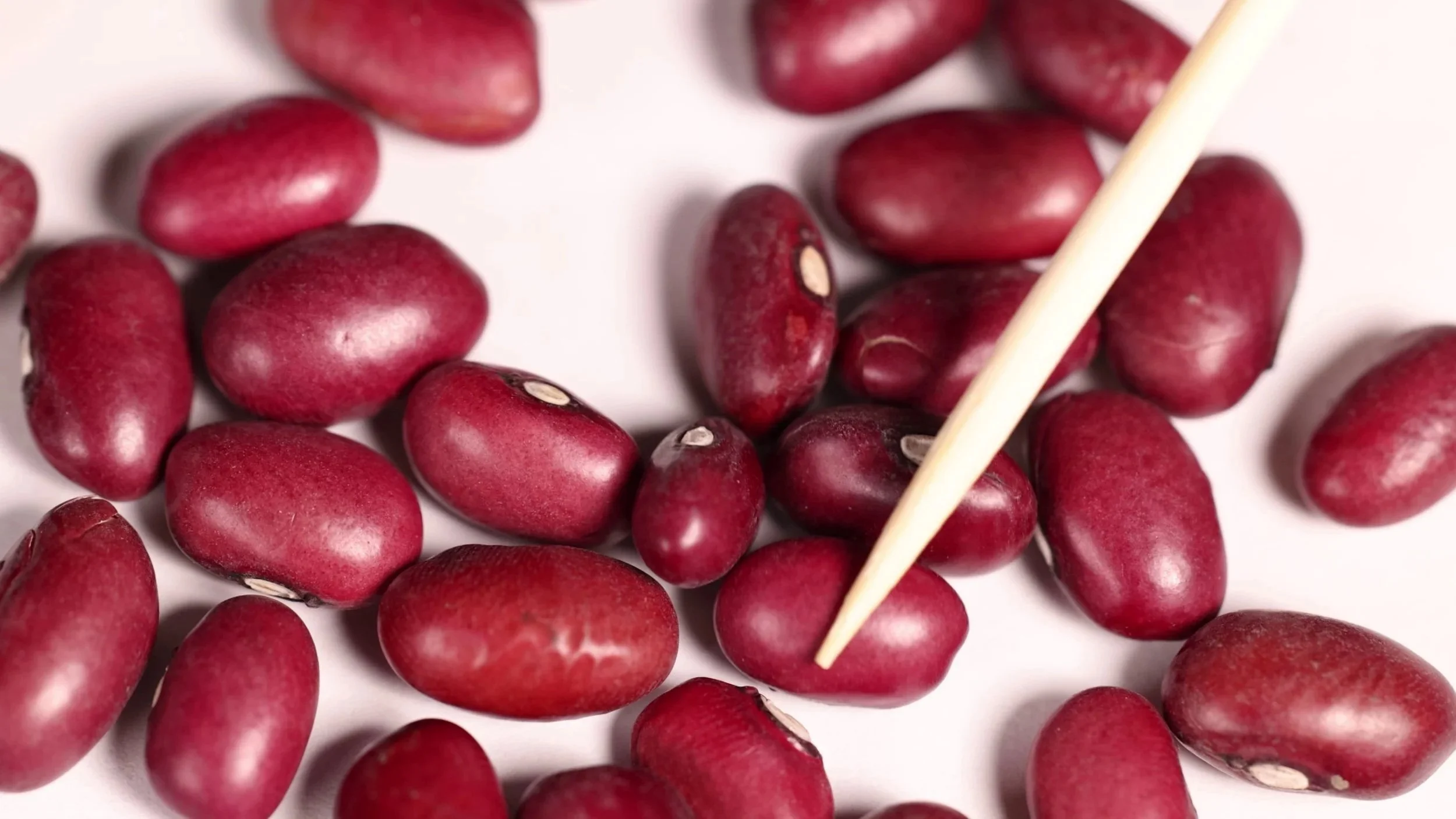
Now, measure beans the way today’s women are really eating them, one cooked cup, and beans earn the crown too: navy beans deliver 66–68% DV, split peas 58%, lentils 56%, pinto 55% and black beans 54%.
In our chart below, we’ve also given a nod to Floura, a power bar whose upcycled ingredients reaches 54% DV, comes in yummy flavors from Brownie Batter to Blueberry Matcha, captures the zeitgeist vibe, and smartly secured distribution at Starbucks. That’s a Branded Marketing A+ for understanding how women eats and where they shop.
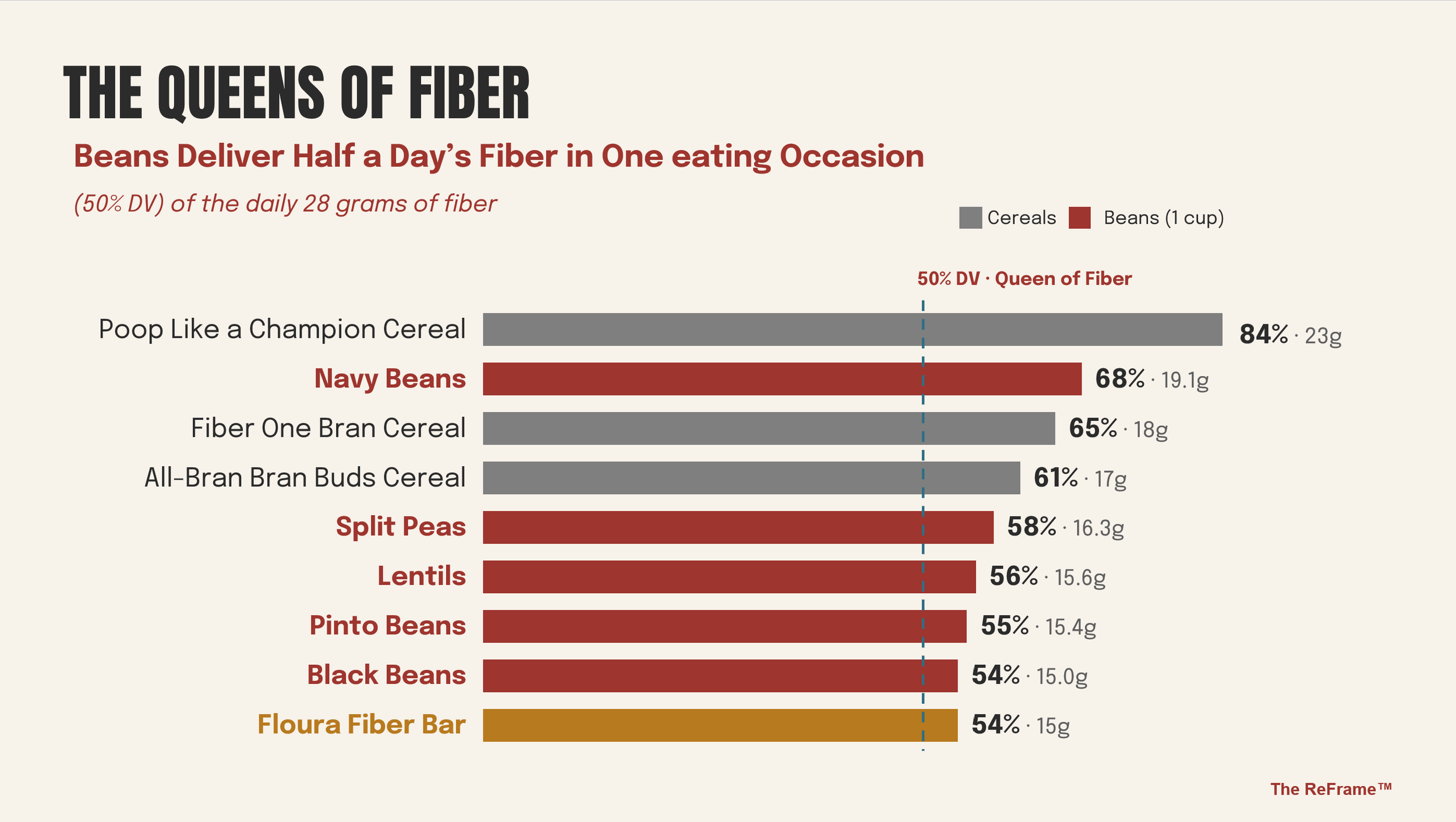
Every product at its labeled serving; beans + legumes at one cooked cup, a meal-size portion
Dear FDA: Beans are no longer just a side dish next to a hot dog.
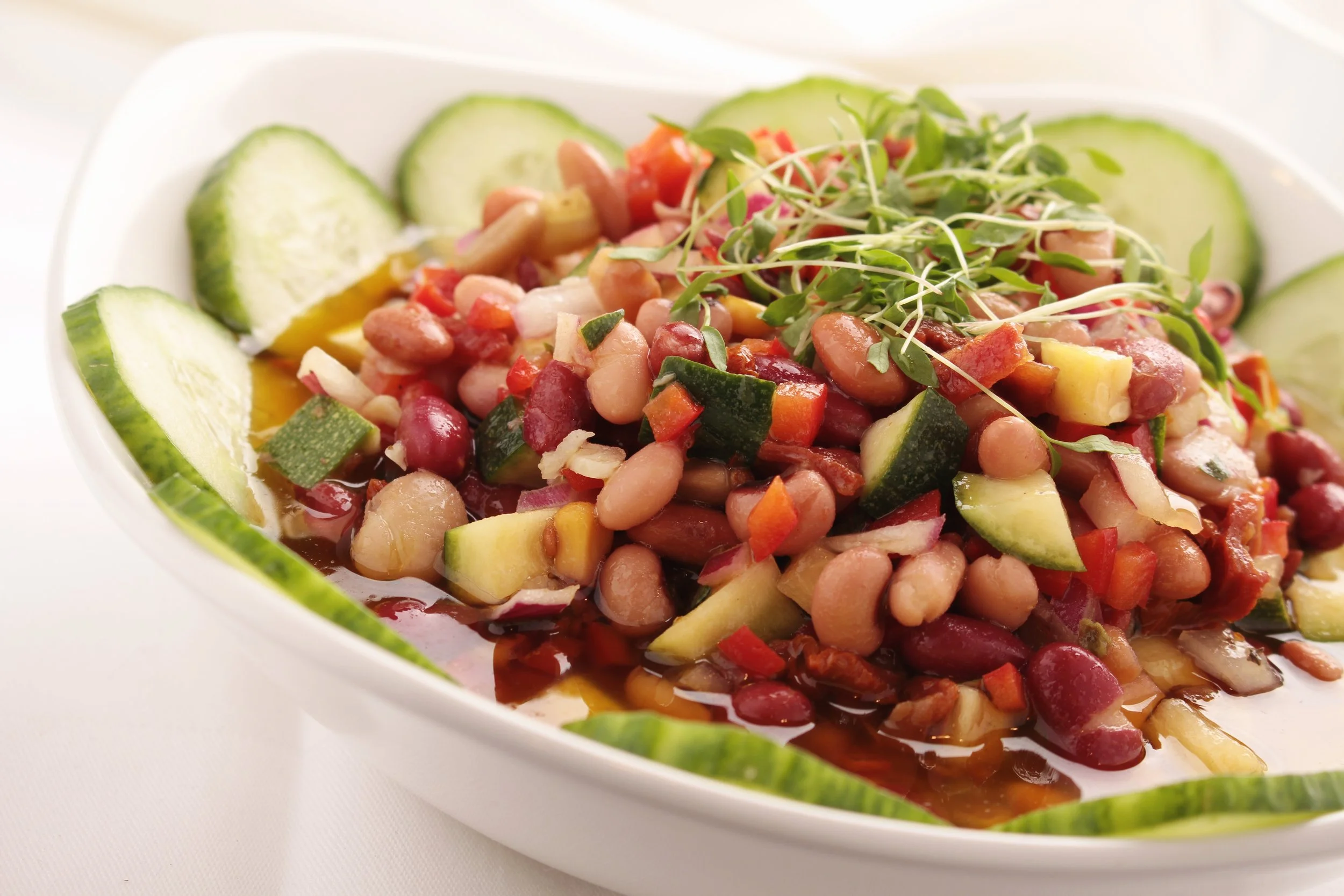
Now enter #BeanTok, #densebeansalad and millions of views around colorful heirloom varieties, cozy “beans on toast” variations, and aesthetic meal prep, with women making beans the center of their plate. For her, the ½ cup bean side dish is over. The FDA official serving size for beans needs a significant overhaul.
Look at San Francisco based creator Violet Witchel, who coined and popularized the Dense Bean Salad, one of the most viral culinary phenomena on social media. She built big, zesty bowls of marinated beans, vegetables, and vinaigrettes designed for lunch, dinner, and weekly meal prep. One of her videos passed 13.5 million views. Then she took it offline into the real world bringing people together through community events.
Whole Foods officially codified “The Bean Boom” in its October trend report, declaring that beans and legumes are moving from side-dish status to “center-of-the-plate real estate.”
Grubhub grocery bean orders jumped 135%, and on Instacart, the share of searches for “fiber” rose 26%, double the growth rate of “protein.” Even PepsiCo CEO Ramon Laguarta said on an earnings call that “fiber will be the next protein.” Move over, Doritos Protein. CPG is coming for fiber, and we’ll have to cut through the marketing claims to find the real Queens of Fiber.
The Business of Beans
And yet, even with all the clear consumer market signals, not a single major bean brand has truly captured the vibe, the yummy convenience or the market share related to the authority of modern fiber.
That is a surprising gap in a category this large. Beans are a massive, mature staple: Bush’s alone is an estimated $1 billion business that controls more than a third of America’s canned bean market, according to Forbes. And that’s canned alone, before dry beans, refrigerated, ready-to-eat and foodservice. Bush’s own chairman says consumers are “looking for fiber.” Yet powerful bean incumbents still lean on the ½ cup side-dish canned mindset and heritage positioning, rather than claiming a modern proposition around gut health, regularity, or meal-sized fiber.
Don’t get me wrong, there are a lot of Bean Princesses that are strong contenders. Premium brands like Rancho Gordo and SIMPLi built fanatical followings around ethically sourced heirloom legumes, proving consumers will gladly pay premium prices for bean culture. For brand energy, more Princess crowns for Bare Beans (format innovation), Heyday (flavor energy), Silly (single-serve personality), along with Fillo’s, A Dozen Cousins, and The Good Bean (convenience).
But no brand has claimed the core positioning: Beans are modern fiber with incredible potential for flavor innovation that capture the needs of today’s women.
The $100 Million ReFrame for Branded Beans
This is a massive top-line product innovation and P&L opportunity hiding right on shelf. One 2026 market estimate puts the U.S. bean category at $2.84 billion, with dry and canned beans representing nearly 76%—about a $2.2 billion core market. Capture five share points with a modern, tasty bean fiber-forward proposition and that represents roughly $108 million in sales.
Here is how a smart bean brand can claim the $100M whitespace:
Five Queens. Five SKUs. Build the line directly around our 50%+ crown tier: Navy, Split Pea, Lentil, Pinto, and Black Bean. At a 1-cup portion, each delivers half HER daily fiber in a single bowl, giving the portfolio familiar variety, great textures, and un-fortified whole-food authority.
Reframe the Format Around How She Eats. Ditch the canned side-dish format. Package single-serve, grab-and-go meal bowls or pouches designed for her desk or a post-workout dinner, aligning with the 58% of ready-meal shoppers who say convenience formats drive purchase intent. Put the proposition front and center: HALF YOUR DAILY FIBER.
The ingredients with the absolute highest natural credentials for fiber authority are sitting right on the shelf. She is waiting. The bean brand that bridges real fiber authority with a tasty, flavor forward vibe that she actually wants will win her cart.
See HER differently. Grow accordingly.